SERIES: My Hair Loss Treatment Journey Red Light Therapy
Pills and products became the norm for me over the years. They were simple to add to my daily routine and seemed to be effective in slowing my hair loss. After a while, however, I noticed my bald spot was becoming more prominent. My hair part was also growing wider. My dermatologist noticed this as well and recommended I start red light therapy.
Red light therapy or low level laser therapy, involves non-thermal, low intensity light of specific wavelengths (10mW–500mW). This treatment can stimulate the hair’s growth phase and prevent hair from prematurely falling out.
Red light therapy was accidentally discovered in the 1960s when Endre Mester, MD tried replicate an experiment in which red light cured malignant tumors in rats. Mester’s laser was not as powerful as the one used in the original experiment so the results were quite different. Instead of reducing tumors the rats grew more hair.
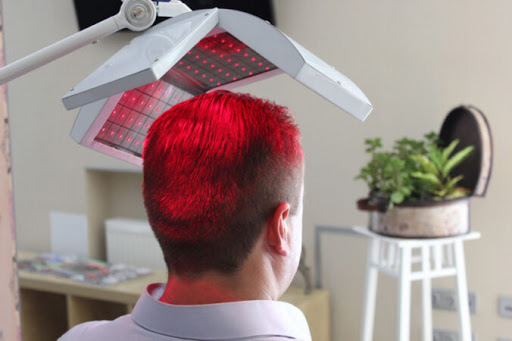
Since then, devices used both commercially and at home have become available. In my dermatologist’s office a large machine with an extendable arm was used. On the end of the arm was a large curved, flat piece with rows of lights. These lights pulsed on and off for a few seconds before I had to rotate positions so my whole head could be treated.
I found this treatment to be very effective in the short term. My hair loss started to once again slow down to a more manageable pace. The sessions only lasted two minutes, however, I did have to go three times a week which I found very disruptive. Later, I bought an at home red light comb which also had to be used three times a week, but for eight minutes instead of two. It definitely was not as effective as the commercial grade machine and unfortunately, red light therapy is another treatment where if you decide to stop, you lose your progress.
While red light therapy helped to slow my hair loss, it may not be right for everyone. It’s important to consult a medical professional about any hair loss concerns you may have and discuss what you should or shouldn’t take. Remember, everyone’s body is different and what may work for some may not work for others.
For more information on red light treatments for hair loss check out the link below: